Back
Hybrid and Virtual Event Production: A Planning Guide
A hybrid event is two shows running at once: one for the room and one for the screen. Here is how we plan the cameras, audio, remote presenters and stream so both audiences get a good program.

November 10, 2026

7 minute read
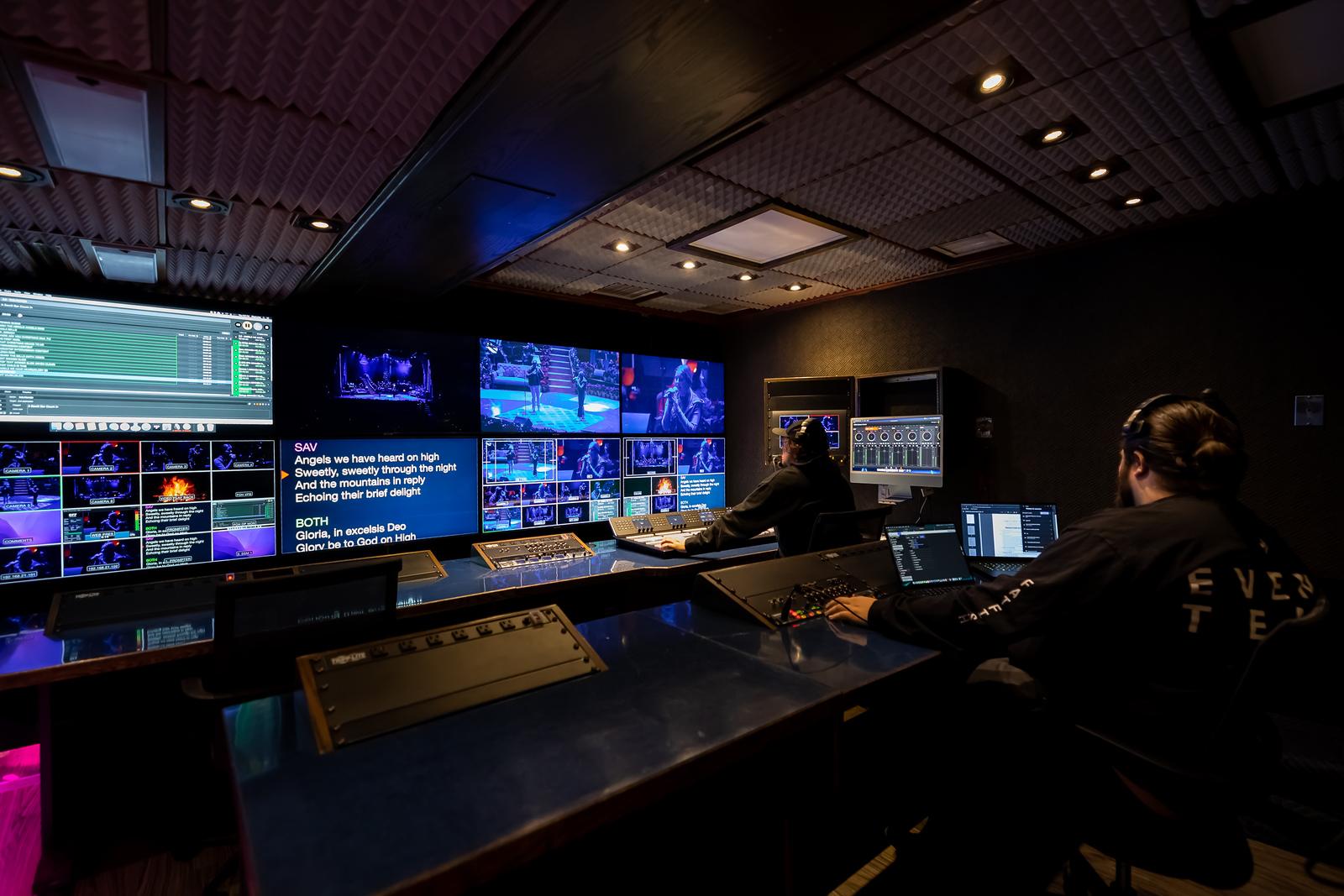
Most companies have now run at least one virtual meeting that felt like a long video call. The difference between that and a produced virtual or hybrid event is not the platform. It is a director, a switcher, cameras placed for the screen, a separate broadcast audio mix and a plan for the people watching from home. Fat Fish Media produces hybrid and fully virtual programs from Salt Lake City for conferences, sales kickoffs, town halls, commencements, galas and product launches.
This guide covers the decisions that shape a hybrid or virtual event, in the order we make them with clients. For the full service, see our event live streaming and hybrid event production page.
Hybrid, virtual or streamed: three different shows
- Streamed event: an in-person event with a live stream added. The room is the priority and the stream follows it. Good for commencements, keynotes and concerts.
- Hybrid event: two audiences with equal weight. Remote attendees ask questions, vote in polls and sometimes present. The run of show is written for both.
- Virtual event: no live audience, or only a small studio audience. Presenters work to camera from a stage, a studio set or their own offices, and the program is built for the screen from the start.
The choice changes the budget and the crew more than anything else. A streamed keynote can run with a few cameras and a stream engineer. A true hybrid conference needs a director, a technical director, a graphics operator and someone whose only job is the remote audience.
Cameras and switching
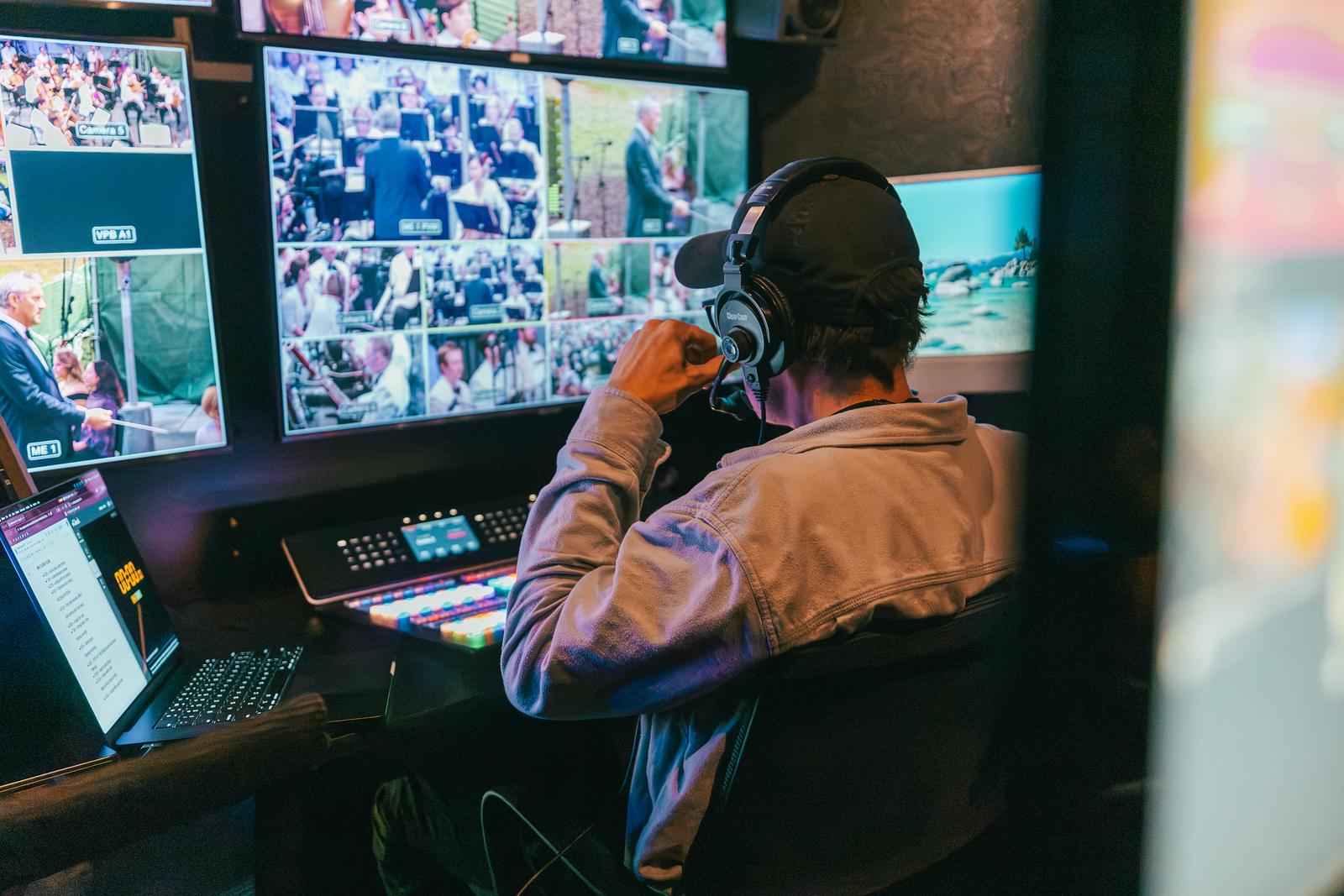
A webcam on a tripod at the back of the room is what makes most streams look cheap. We plan cameras for the screen: a long-lens camera on the presenter from the back of the house, a wide shot that shows the room, a closer angle from the side for panels, and PTZ cameras where an operator cannot stand. Everything feeds a live switcher with lower thirds, slides, video playback and picture-in-picture for remote guests.
The same switcher can feed the LED walls in the room, so the IMAG on the screens and the stream are one program. That saves a camera crew and keeps both audiences watching the same show.
Remote presenters
Remote speakers are where hybrid events break. We bring each remote presenter into the switcher with a return feed, so they can see and hear the room, and we run a tech check with each of them before show day: camera framing, lighting, microphone and internet. A producer stays on a backchannel with remote speakers during the show to cue them in and out.
Audio for the stream is a separate mix
The mix that sounds right in a ballroom sounds thin on a laptop. We run a dedicated broadcast mix, separate from the room PA, with audience microphones so applause and laughter come through, and with remote presenters mixed so they do not echo through the room speakers.
Platform and internet
We can stream to YouTube, Vimeo, LinkedIn Live, Zoom, Microsoft Teams, a private portal or your event platform, using redundant hardware encoders. Venue internet is the biggest risk on show day, so we test the venue line in advance and add bonded cellular when the venue cannot guarantee bandwidth. For ticketed or internal programs, a private platform with registration keeps the stream inside the company.
Webinar and virtual studio production
Not every virtual program needs a ballroom. For webinars, product demos, investor updates and training series, we build a studio set with cameras, lighting, a confidence monitor and a teleprompter, and produce the session live or record it for on-demand release. The production standards are the same as a conference general session, only smaller.
What we have produced
- Commencement ceremonies for Western Governors University in arenas and stadiums, with multi-camera IMAG on the venue screens and a live stream for families watching from home.
- The Momentum 2026 general session for Magellan Financial: keynote and panels switched for the ballroom LED wall and recorded, followed by a concert with Train on the same stage.
- The Adidas x Wanderlust hybrid launch: rooftop yoga classes in Los Angeles and New York switched into one live stream for nearly a million viewers.
Multi-day and arena programs usually run from one of our two broadcast trucks, a 53-foot expanding semi and a 24-foot trailer, so the control room does not take space in the venue.
What drives the cost
Camera count, crew days and the control setup drive most of the cost, followed by remote presenter support, redundant internet and post-event editing. A streamed keynote with a stream engineer is a modest line item. A multi-day hybrid conference with a truck, a full crew and edited session videos is a different order of magnitude. We quote line by line so you can add or remove items before you commit.
Frequently asked questions
What is the difference between a hybrid event and a virtual event?
A hybrid event has a live audience in the room and a remote audience online, and the program is built for both. A virtual event is produced for the screen only, with no live audience or only a small studio audience.
Which platforms can you stream a hybrid event to?
Any platform that accepts an RTMP or SRT feed, including YouTube, Vimeo, LinkedIn Live, Zoom, Microsoft Teams and private event platforms. We use redundant encoders and can add bonded cellular internet.
Can remote speakers present live during a hybrid event?
Yes. Remote presenters join through the switcher with a return feed so they can see and hear the room. We run a tech check with each speaker before the show and keep a producer on a backchannel with them during it.
Do you produce webinars and virtual studio sessions?
Yes. We build a studio set with cameras, lighting and a teleprompter for webinars, product demos, investor updates and training series, produced live or recorded for on-demand release.
Do you only work in Utah?
We are based in Salt Lake City and produce across Utah, and our trucks and crew travel nationwide for hybrid conferences, commencements and launches.
Planning a hybrid or virtual program? Tell us the date, audience and platform and we will come back within one business day with a production plan and a line-item quote.
Our BLOGs
Articles & resources

Bartending for Events with Alexi Fisher
Alexi Fisher is the owner of both The Hammered Copper mobile bartending service and The Cocktail Collective, a cocktail and spirits education facility. We had the pleasure to sit down with her and talk about how she broke into the events industry through bartending!

An After Party with Gwen Stefani
Fat Fish Media was brought in to lead video direction for Gwen Stefani’s After Party, orchestrating the in-person video wall experience and live broadcast. We made sure every angle captured the energy, style, and star power—making Gwen and her team look nothing short of iconic.

Natural History Museum of Utah
In the foothills of Salt Lake City, the Natural History Museum of Utah houses 163,000 sq. ft. of exhibitions and a variety of event spaces available to rent.
Trusted by customer-led product companies


