


Two trucks
Mobile production units at a glance
Fat Fish Media owns two mobile production units based in Salt Lake City: a 53-foot expanding broadcast truck and a 24-foot broadcast trailer. Both roll with engineers and camera crew for arena shows, commencements, sports, festivals and televised events across Utah, the Mountain West and beyond.

53-foot expanding broadcast truck
A full production truck with separate production, audio and engineering rooms, built for arenas, stadiums, commencements and televised events.

24-foot broadcast trailer
The same signal chain in a smaller footprint for festivals, concerts, sports and corporate shows, parked beside the stage with a two- to four-camera package.

Production room
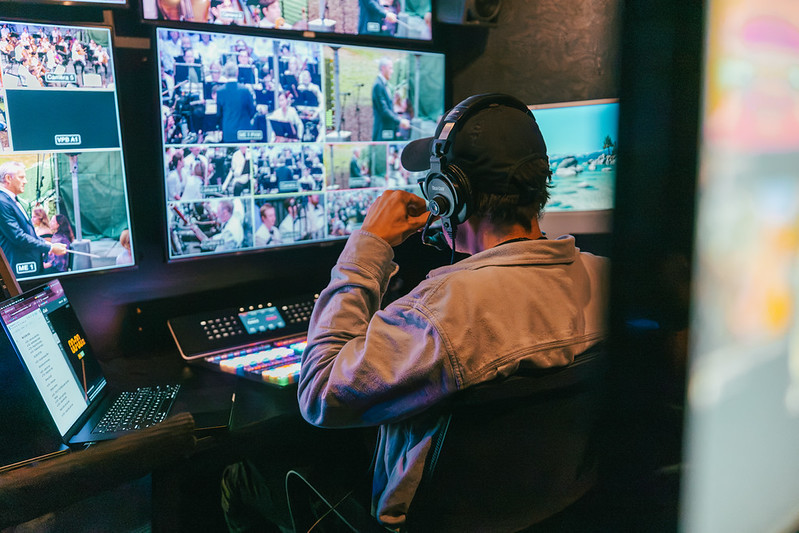
Director and technical director in front of a multiview monitor wall, switching multi-camera shows up to 4K with replay and graphics.

Audio room
A dedicated broadcast mix on its own console, separate from the room PA, so the stream and the recording sound as good as the room.

Engineering and I/O
Racks, patch bays and an exterior connection panel that take fiber from the stage and send clean program feeds to screens, streams and networks.
Recording, replay and streaming
Isolated recording of every camera, replay, captioning and redundant streaming encoders. For arena and stadium shows the trucks carry their own connectivity.
Broadcast trucks based in Salt Lake City
Two mobile units, crewed and ready to roll

The 53-foot expanding broadcast truck
Our large truck is a 53-foot expanding trailer built by Gerling. On site it expands to make room for separate production, audio and engineering rooms, so the director, the broadcast mix and the engineers each have their own space. It handles multi-camera switching up to 4K with isolated recording of every camera, replay, graphics, captioning and streaming, all fed by fiber from the stage. This is the truck we send to arena commencements, stadium shows and televised events.
The 24-foot broadcast trailer
The 24-foot broadcast trailer carries the same signal chain in a smaller footprint. It parks beside the stage at festivals, concerts, sports and corporate shows with a two- to four-camera package, and it fits venues where a 53-foot trailer will not. One switch feeds the IMAG screens, the recording and the stream, so the room and the online audience see the same show.


Production, audio and engineering under one roof
Inside, the production room puts the director and technical director in front of a multiview monitor wall. The audio room builds a dedicated broadcast mix separate from the room PA, with intercom between the director, camera operators and the stage. Engineering watches every feed, and an exterior connection panel takes fiber from the stage, so the control room sits outside the venue and the ballroom stays clear.
Engineers, camera crew and the rest of the show
Both trucks roll with engineers and camera crew. A typical crew is a director, technical director, camera operators, a broadcast audio engineer, a stream engineer and a graphics operator, with one producer as your point of contact. The trucks tie straight into Fat Fish LED walls, cameras and audio systems and send clean program feeds to any stream or network. Already have a production company? Our broadcast team can work alongside theirs.

Truck specs
Size, rooms and the signal chain
53-foot truck
Expanding trailer built by Gerling, 8.5 feet wide on the road, 13.5 feet tall, about 46,000 pounds
24-foot trailer
The same signal chain in a smaller footprint, with a two- to four-camera package
Rooms
Separate production, audio and engineering rooms in the 53-foot truck
Switching and recording
Multi-camera switching up to 4K, isolated recording of every camera, replay, graphics and captioning
Cameras
Studio broadcast cameras with box lenses on fiber, PTZ cameras, handheld cinema cameras and wireless video
Audio
Dedicated broadcast mix separate from the room PA, intercom between director, camera operators and stage
Streaming
Redundant encoders, and the trucks carry their own connectivity for arena and stadium shows
Crew
Director, technical director, camera operators, broadcast audio engineer, stream engineer and graphics operator
Base
Salt Lake City, with trucks and crew traveling nationwide
What rolls with the truck
Broadcast engineers
Engineers park, power, cable and test the truck, then monitor every feed through the show.
A director and camera crew
Director, technical director and camera operators sized to your camera count.
Fiber from the stage
Camera and signal fiber run from the truck to the stage, the cameras and the screens.
Isolated recording
Every camera recorded on its own alongside the program cut, ready for the edit.
Graphics, replay and captioning
Lower thirds, replay and captions built into the program feed.
Feeds to the room and the stream
Clean program feeds to the IMAG screens, the stream and any network taking the show.
How renting a broadcast truck works
Step 1
Share the show
Venue, dates, camera count and where the program needs to go: screens in the room, a stream, a recording or a network.
Step 2
We plan and quote
Truck, cameras, crew, fiber runs, parking and power in one quote, with a producer as your point of contact.
Step 3
Park, cable and test
The truck parks, ties into power, runs fiber to the stage and tests every camera and feed before rehearsal.
Step 4
Show, record and strike
The crew switches, records and streams the show, hands off the recordings, then the truck rolls out.
Where the trucks work
Arenas, mountains and multi-day programs

Arena commencements. The 53-foot truck is the switching, recording and graphics position for university commencements in arenas and stadiums across the country.

Mountain concerts. The 24-foot trailer parks behind the stage for outdoor summer concert series at mountain resorts.

Multi-day conferences. General sessions switched, recorded and streamed from the truck so the ballroom stays clear.
Where the trucks go
Both trucks are based in Salt Lake City, so Utah and the Mountain West are home turf. Trucks and crew travel nationwide for commencements, conferences and tours.
- Salt Lake City
- Park City
- Provo and Orem
- Ogden
- Lehi and Silicon Slopes
- Sandy and Draper
- Logan
- St. George
- Las Vegas
- Denver
- Boise
- National touring
Streaming the show too? See event live streaming services
More rentals
LED walls, lighting and the full inventory
A/V Equipment Rentals
Our full lighting, audio, video and staging inventory with delivery, setup and technicians across Utah.
See all rentalsLED Wall Rental Utah
2.9mm indoor, 3.9mm outdoor and 1.5mm fine pitch LED walls with processing and technicians.
LED wall rental detailsLighting Rental Utah
Moving heads, LED wash, truss, consoles and decorative lighting with riggers and technicians.
Lighting rental detailsThe brands we work with


Client reviews
What clients say
★★★★★
“The best AV vendor.”
★★★★★
“Best company for all your production needs!! Very professional. Easy to work with!!”
★★★★★
“We called them 3 days before we were going to hold our event. With minimal preparation, a less than optimal venue, and in the midst of a pandemic, they knocked it out of the park. They are really good at what they do. Don't go anywhere else.”
FAQ
Broadcast truck rental questions
What broadcast trucks do you rent?
Two mobile production units based in Salt Lake City: a 53-foot expanding broadcast truck with separate production, audio and engineering rooms, and a 24-foot broadcast trailer with the same signal chain in a smaller footprint.
Do the trucks come with a crew?
Yes. Both trucks roll with engineers and camera crew. A typical crew includes a director, technical director, camera operators, a broadcast audio engineer, a stream engineer and a graphics operator, with a producer as your single point of contact.
How much does broadcast truck rental cost?
It depends on which truck, the camera count, crew days and travel. Send us the venue, dates and what the program needs to feed and we will build one quote that covers the truck, cameras, crew and fiber.
Which truck do I need?
The 53-foot truck suits arenas, stadiums, commencements and televised events that need separate production, audio and engineering rooms. The 24-foot trailer suits festivals, concerts, sports and corporate shows with a two- to four-camera package. Tell us about the show and we will recommend one.
What does the truck need from the venue?
Level parking within a fiber run of the stage and a power tie-in or generator. The 53-foot truck is 13.5 feet tall and 8.5 feet wide on the road, and it expands on site, so we check clearances and the parking footprint ahead of time. Your producer coordinates the details with the venue.
Can you stream and record from the truck?
Yes. Both trucks handle isolated recording of every camera, replay, graphics, captioning and streaming on redundant encoders. For arena and stadium shows the trucks carry their own connectivity.
Do the trucks travel outside Utah?
Yes. Trucks and crew travel nationwide for commencements, conferences and tours, including arena and stadium shows well outside Utah.
How far in advance should we book a broadcast truck?
Three to six months is typical for commencements, multi-day programs and arena shows, which secures the truck, the venue circuit and the crew. Reach out even on a shorter timeline and we will tell you what is available.
